Friday, 17 February 2012

Coffee Shop Confusion in the Netherlands


Amsterdam.
New Year’s Eve in Amsterdam was even more festive than usual this season as thousands of European visitors flocked to the city to enjoy what they believed would be the last night they’d be welcome in the coffee shops of the Netherlands.
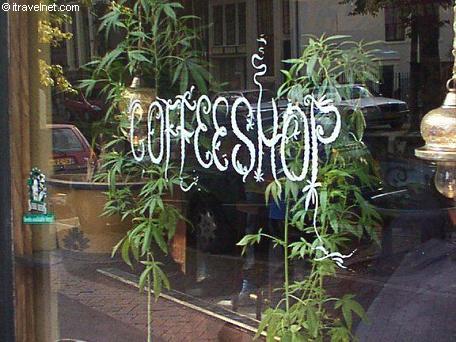

For several months, the reigning Dutch government had been trumpeting the imminent demise of the old coffee shop regime as of Jan. 1, 2012, and the mainstream media were only too eager to amplify the message.
Under the mandated new rules, all existing Dutch coffee shops would be converted to members-only clubs strictly limited to the patronage of Dutch citizens and registered expatriates, and the dreaded “drug tourists” from all over the world would be barred from entry.
But after the border city of Maastricht and other municipalities in Holland demanded that the government delay its plans for at least a year, Justice Minister Ivo Opstelten announced in November that the system won’t be introduced nationwide until 2013.
At the same time, Opstelten insisted that cannabis cafés in three towns in the south of the country — Noord-Brabant, Limburg and Zeeland — will have to turn themselves into members-only clubs by May 1 of this year as a sort of pilot program for the new policy.
Coffee shop owners in Maastrict have already banned all but Dutch, German and Belgian nationals from buying cannabis products in an effort to appease the
government, and the border towns of Bergen op Zoom and Roosendaal have gotten rid of their coffee shops altogether.
Elsewhere in the Netherlands, 16 coffee shops In Rotterdam have been shut down because they were located within 250 meters of schools. If this proscription were applied across the country, another 94 coffee shops would have to close. To make things even worse, the government wants to extend the distance-from-school rule from 250 to 350 meters, which will shut down even more coffee shops.
This whole mess started in 2006 when the city of Maastricht decided to ban tourists from the local coffee shops and a coffee shop owner was forced to close after two non-Dutch nationals were found on his premises.
In upholding the legality of the city’s action, The Netherlands’ highest court, the Council of State, appealed to the high European court — sort of the EU equivalent of the U.S. Supreme Court — to issue a ruling that the Maastricht ban does not conflict with EU laws.
Last July, EU Advocate General Yves Bot said the Netherlands was within its rights to ban tourists from coffee shops. Bot said he considers the move necessary to “protect public order” and “reduce the nuisance caused by drug tourism.” In addition, Bot said, the ban would contribute to European efforts to combat the illegal drug trade.
In Amsterdam, the City Council opposes the introduction of the membership scheme. “We are concerned about the problems that will arise from large-scale street dealing,” one councilman said, adding that “there are also health concerns, because with street dealing we cannot monitor the quality of the soft drugs or the age of the buyers.”
The city had solved these problems in the early 1970s when it decriminalized recreational drug use and allowed the establishment of coffee shops as places where cannabis products could be sold and consumed in-house.
But the Dutch policy of tolerance has never been at all popular with most other European governments nor the draconian American authorities, and the social truce that has allowed over-the-counter cannabis commerce in Holland to flourish has always been an uneasy one.
The recent demonstration of official opposition to the coffee shop culture has been a long time coming, but now it looms large on the immediate societal horizon. The Christian Democratic party (CDA) that ruled in the 1990s and early 2000s and remains part of the current government has never fully accepted the “gray area” philosophy, and now that its coalition partners comprise the Liberals and the anti-Islam party led by Geert Wilders, the CDA is making its move with unprecedented confidence.
The intensified crackdown on the coffee shop culture seems to have been enabled by the findings of a government commission in 2009 that concluded hashish and marijuana are far more powerful now than when the “gray area” policy was introduced in the 1970s. (This increase in potency, of course, is the result of the rapid development of the Dutch growing community and its wizardry in generating new and ever more effective strains of marijuana.)
At the same time, according to the authorities, the bigger the coffee shop industry becomes, the more likely it is to come into the grasp of “organized crime.” To that end, the commission recommended cafés become smaller and should sell only to locals.
The illegal growing industry is thought to be worth some $2.6 billion a year, involving some 40,000 people in marijuana cultivation operations on what they call plantations, of which some 5,000 are busted each year. The Dutch government now intends to increase its efforts to drive “organized crime” out of the production and trade of marijuana and to seize the assets of convicted drug criminals.
The crazy thing is that, with marijuana cultivation and distribution remaining illegal, persons engaged in these activities are organized criminals by definition. If they really want to get “organized crime” out of the cannabis business, they would simply legalize marijuana completely and all that crime would just go away since it wouldn’t be “criminal activity” any longer.
The war against marijuana users and the cannabis culture is particularly absurd because there’s no social harm that’s ever been proved to result from viping beyond the possible inducements to race-mixing and guilt-free sexual activity that are proscribed by the orthodox religious order.
Here in Holland, the long-term tolerance of the cannabis culture has both created an atmosphere that attracts weed-smoking pilgrims to make up a significant portion of the local tourist economy and fostered a full-scale cannabis industry that generates billions of euros worth of business within the intimate confines of this tiny nation.
Accordingly, every knowledgeable person I have consulted about the issue continues to scoff at the notion that the state can transform the coffee shop culture by means of the pending legislation.
My friend and mentor Michael Veling, proprietor of the 420 Café and a life-long cannabis activist in Amsterdam, remains convinced that the year-long moratorium now in effect will no doubt end in a further extension of the truce rather than a victory for the suppressive forces.
“There is no way they are going to be able to demonstrate in the courts that ‘drug tourism’ constitutes a ‘public nuisance’ or a ‘threat to public order,’” Veling told me, adding that Justice Minister Opstelten, a Liberal Party member, will have to report back to the CDA representatives — who started this shit thinking they could finally win the battle — that he tried everything but it proved impossible to enforce their mandate and things will have to continue as before.
At any rate, Veling stressed, would-be drug tourists from America and elsewhere will definitely be welcome in the coffee shops of Holland for at least the  entire present year. C’mon over, he said, we appreciate your business.
by JOHN SINCLAIR http://www.counterpunch.org

Cannabis, Schengen and double standards


Malta is a signatory to the Schengen agreement, which it signed on joining the EU. For anyone who is not familiar with this agreement, it allows for the free movement of EU nationals.
skunk weed cannabis plantIt also allows for EU nationals to transport their medicines across borders. Schengen allows medical users of either Sativex (which is cannabis oil in a spray bottle) or Bedrocan to travel to another country that signed the Schengen agreement for up to 90 days. Any person harassed or detained would be looking forward to hefty compensation from that country.

So why are people like Daniel Holmes doing lengthy prison sentences for cultivation when any other EU national can enter Malta with a prescribed legal cannabis medicine? Or does Malta enjoy an exemption from this part of the agreement?

Why should someone who cultivated such small amounts of cannabis, which, obviously, were not for sale – as the quantity was so small and the effort involved so large – end up with such a long, draconian sentence?

There really needs to be a lengthy, educated discussion on this issue with all the science put on the table; not pseudo science from aging police medical doctors, which is mostly taken from studies that are heavily biased and paid for by prohibitionist groups and alcohol industry insiders.

If cannabis caused half the harm some paid-up prohibitionists say it does, then why was Sativex given a licence and why is Bedrocan legal?

Why have cases of schizophrenia dropped dramatically or remained static in so many European countries while cannabis use has increased threefold over the last three decades?

Governments can’t just cherry-pick data that supports their own outdated prejudice. Any government that does not reclassify alcohol and tobacco to Class A has failed in its duty to protect its own citizens.

There are about 75 million cannabis users in Europe and we deserve the same rights as those who enjoy wine, spirits, beer and tobacco.

Those who use cannabis hold down jobs, pay tax and vote!

By Paul Smith
Source: timesofmalta.com

Swiss set to relax cannabis laws


Swiss pot smokers are expecting a relaxation of the rules when parliament reviews the country's cannabis laws in March.
Although Switzerland voted against full legalization of cannabis a few years ago, the topic is still being debated. Parliament must now consider a new compromise, which could reduce penalties for people over 18 years of age.
The proposal would see a new distinction in the way individuals are treated which would depend on the amount of weed in a person’s possession. Any adult caught carrying 10 grams or less could simply receive an on-the-spot fine of 100 francs ($109) rather than being dragged before a judge.
Minors would not be able to take advantage of this distinction, and would still be required to go before the courts.
Many are critical of the new proposal, such as Toni Bortoluzzi of the Swiss People’s Party. He believes the limit of 10 grams is unacceptably high and thinks it should be reduced, online news website 20 Minutes reported.
Others such as Jacqueline Fehr, of the Social Democratic Party of Switzerland, are against the introduction of a fixed limit. It would be unrealistic to implement as the police cannot be expected carry scales about with them, she said. 
Fehr and others believe it would be better if each situation were judged on its own merits, with further action being taken where circumstances pointed to other criminal activity.
But Ruth Humble, of the Christian Democratic People’s Party, believes the idea of a fixed limit is fair.
“It cannot be the case that the police in each canton make judgments on different quantities,” she said.
In St. Gallen, a fining system is already in operation. Here the fines are set at 50 francs ($54) for any adult caught with up to five grams of cannabis. Originally the definition of an adult meant that people aged 15 and older were able to escape with a fine only. This was amended a year ago so that the age limit is now 18 years.
“We have been happy to take on the extra work because it has enabled us to identify young people at risk,” prosecutor Thomas Hansjakob told 20 Minutes.

Legislation to control illegal drugs may be the best solution


THE cause of Whitney Houston’s death remains undisclosed but the widespread assumption is that it was caused by drugs.
After all, she had battled with drug problems earlier in her life, particularly with crack cocaine (although this was something she denied) and she told Oprah Winfrey only three years ago how her mother had confronted her dramatically about her problems. Tales of her use of crack cocaine featured prominently in the early coverage of her death.

Some prominent figures in the US reacted to this by claiming that this latest premature death of a popular artist at a young age drew attention to the failure of the "war against drugs" and the need to follow a different approach, such as the legislation and control of banned substances. It has been widely reported that the singer Tony Bennett told a party gathering on the night of Houston’s death that "first it was Michael Jackson, then it was Amy Winehouse, and now, the magnificent Whitney Houston. I’d like to have every gentleman and lady in this room commit themselves to get our government to legalise drugs — so they’ll have to get it through a doctor, not to some gangsters who just sell it under the table."

It was a bizarre comment because it was based on a complete misunderstanding of the cause of the deaths of those people. It is widely known that Jackson’s death was caused by the lethal ingestion of a cocktail of prescription drugs, supplied by a doctor who is now jailed as a result. Winehouse’s death was attributed to her resumption of the consumption of alcohol that her fragile body was unable to withstand. Houston’s death has not been explained as yet, but her well-documented problems in recent years had been attributed often to a combination of alcohol use and legal prescription drugs, as much as illegal drugs.

The list of prominent actors to have died at a young age in recent years includes actor Heath Ledger, who died because of a fatal combination of painkillers, sleeping pills and anti-depressants. The actress Brittany Murphy died from multiple drug intoxications combined with pneumonia.

In the US it has been estimated that in 2007 there were 28,000 deaths from prescription drug overdoses, five times higher than the number from 1990. A greater number of people die in the US every year from prescription drug abuse than result from the misuse of heroin and cocaine combined.

According to figures supplied in a recent edition of The Economist, 1.2% of all Americans had misused prescription drugs, usually powerful painkillers, in 2001. By 2010 this number had more than doubled to 2.7%, putting painkillers second only to marijuana as the drug of choice (leaving aside alcohol). In 2000 pharmacies dispensed 174m prescriptions for opioids but by 2009 this had increased to 257m. Doctors have been accused of running "pill mills", giving prescriptions quickly in return for cash. If people can’t get drugs themselves they purchase them from family or friends who have obtained them legitimately. Taken in excessive quantities, or mixed with other drugs and/or alcohol, they can be deadly. Regulation does not seem to be working, or at least the enforcement may not be good enough.

This might seem like a good reason for controlling further the supply of such prescribed drugs with greater responsibility being placed on doctors and pharmacists to make it more difficult for those who want these drugs to get them without very good reason.

It might also seem to provide a good argument against the legislation of drugs such as cocaine, heroin, marijuana and other products. If those are made legal then it is probable that the available supply becomes increased and that, in turn, increases the use and misuse of those drugs. They are illegal because they are so harmful. If you make something that is harmful legal, then that confers legitimacy upon it and can promote the use, and then misuse, of it. Some anti-alcohol activists claim that alcohol would be banned immediately if it was a modern day invention that had to be presented to the US Food and Drink Administration for approval: the immediate and long-term effects of excessive consumption are too deadly and would not be tolerated.

The reality is that many people will take drugs whether they are legal or not, good for them or not. At least the amounts of prescription are regulated and users have a degree of confidence about their knowledge of what they are getting (notwithstanding the misuse that still goes ahead). One of the many problems associated with illegal drugs is that nobody knows what they are getting. Criminal distributors have been known to "cut" these drugs with all sorts of other products and additives, including rat poison, to "bulk up" the size of the amount of the drug being sold, increasing their profits from a batch. The health effects of such actions can be disastrous. The type of marijuana being sold in Ireland now is of a much greater potency than was available to previous generations. It is often grown now in industrial-style conditions in Ireland, a genetically modified crop that is far more addictive and potentially damaging to the health of the user. If these illegal drugs were prepared and packaged under licence the potential for regulating the quality and quantity of the doses would be greatly improved.

There are other benefits to legislation. A legitimate industry can be taxed, providing the income to the State to pay for health treatments that may be required because of misuse of the drugs. Price can also be used as a way of moderating consumption, much as is the case with cigarettes and alcohol.

Putting the business in the hands of licensed operators may also help in combating the drug gangs who use extreme and excessive violence as part of their underground and illegal business methods.

One of the arguments made against legislation — apart from ethical or moral ones — is that it cannot be done in Ireland in isolation from the rest of Europe. But this is bogus because other EU countries have different laws.

In Portugal they have come to the conclusion that prohibition does not work and that the issue of drug abuse should be treated as a health rather than criminal one.

A decade ago the Portuguese decriminalised drug use. In Portugal a drug addict is seen as a "sick person" in need of treatment, not as a criminal. The country has a "yellow card" system, which warns users about their behaviour and tries to steer them away from drugs. When people are caught in possession of drugs for personal use (below a specified quantity) they are dealt with by a commission for the dissuasion of drug abuse, comprising a legal expert, a health professional and a social worker.

The Portuguese claim that this has not made the country a "paradise" for users or resulted in more children taking drugs. They claim their comprehensive strategy has led to reduced drug consumption among adolescents, falling heroin use and a reduced burden on the criminal justice system. EU figures now show cannabis and cocaine use among 15-to-34 year olds in Portugal is around half the EU average.

In Ireland we do try to help people with addictions to illegal drugs as a health issue, with some wonderful clinics such as the Coolmine and Merchant’s Quay outfits taking up the burden, with some support from the State. But we still treat people with addictions to illegal drugs differently to those who suffer addictions to legal or accepted drugs.

And as we see too often, the latter can be just as dangerous.

* The Last Word with Matt Cooper is broadcast on 100-102 Today FM, Monday to Friday, 4.30pm to 7pm.

Read more: http://www.irishexaminer.com/opinion/columnists/matt-cooper/legislation-to-control-illegal-drugs-may-be-the-best-solution-184132.html#ixzz1meqBFbjc

Sweden approves Sativex

Medicinal cannabis is now available as a prescription medicine in Sweden after the Medical Products Agency (Läkemedelsverket) approved a cannabis-based mouth spray for the treatment of multiple sclerosis.


"This is great news for those who can't get any relief from the most common drugs," said Jan Hillert, an MS researcher at Karolinska Institutet, to the Dagens Nyheter daily.

The agency has said that it plans to closely monitor the prescription of the new drug to ensure against abuse.


According to the agency however, the spray does not give any sort of "kick" as the cannabis content is in such small doses and common side effects include dizziness, nausea and drowsiness.

People suffering from MS, which damages the brain and the central nervous system, often experience problems with stiffness and muscle cramps. 

The spray, which is used under the tongue, has been proved to be successful in alleviating MS symptoms by a series of medical studies. 

The cannabis spray is already available in the UK and Spain. Earlier this year it was approved by agencies in Germany and Denmark.


It is not strictly illegal today to prescribe medicinal cannabis in Sweden but it is a lengthy and complicated process. 

The doctor has to apply for a special permit from the Medical Products Agency and if approved the closest pharmacy has to arrange a special import.


The Local (news@thelocal.se)

Copenhagen votes to legalise Cannabis


The scheme, if approved by the Danish parliament at the start of next year, could make the city the first to fully legalise, rather than simply tolerate, marijuana consumption.
The drug is already sold openly on the streets of Christiania, a self-proclaimed 'free town' in the city centre, despite the closure of the neighbourhood's Amsterdam-style coffee shops in 2004.
But marijuana has never been officially decriminalised and those caught in possession of even small amounts face fines of up to £450.
"We are thinking of perhaps 30 to 40 public sales houses, where the people aren't interested in selling you more, they're interested in you," said Mikkel Warming, the Mayor in charge of Social Affairs at Copenhagen City Council. "Who is it better for youngsters to buy marijuana from? A drug pusher, who wants them to use more, who wants them to buy hard drugs, or a civil servant?"
The City Council voted on Thursday night, by a margin of 39 votes to nine, to empower Mr Warming's Social Affairs committee to draw up a detailed outline of how the plan would work.

The proposal will then be sent to to the Danish Parliament for approval early next year.
"We want to make it a little bit more concrete what kind of decriminalisation we want: should it be a public buying system, should there be an age limit?" Mr Warming explained.
He said he was opposed to instituting cannabis cafés, where marijuana use is tolerated, despite it remaining illegal to grow and import the drug.
This, he argued, would leave the revenues, which are estimated at £200m, in the control of the city's notorious biker gangs.
"We don't want an Amsterdam model. We want a way to make it legal to import or grow marijuana." he said.
Cannabis possession and production in the Netherlands are still technically punishable by fines. Its notorious coffee shops are also illegally but are tolerated.
The Danish parliament voted down a previous proposal submitted by Copenhagen City Council three years ago.